Category: Cleaning

  • How Often to Clean Your House: A Room-by-Room Guide

    How Often to Clean Your House: A Room-by-Room Guide

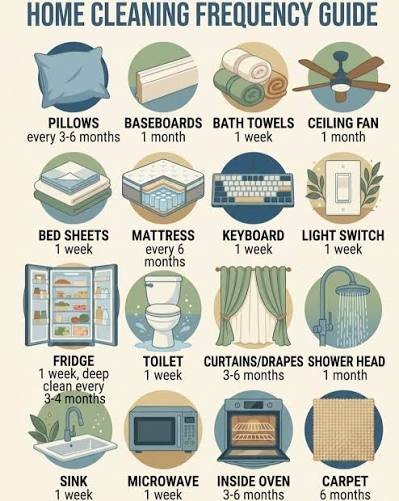
    Do you ever stand in the middle of your living room, look around, and genuinely have no idea if it’s “clean enough” or overdue for a proper scrub? You’re not alone. One of the most searched questions is simply how often to clean your house — and the honest answer is: it depends on the room, not a single blanket schedule.

    Some things need daily attention. Others can wait weeks, even months, without any real consequence. I used to treat my whole house like it needed the same level of care every weekend, and looking back, that was just wasted effort. This guide breaks it down properly, room by room, task by task, so you’re not scrubbing the ceiling fan every Sunday while your fridge quietly grows something questionable in the back corner.

    Why “Once a Week for Everything” Doesn’t Work

    Most people default to a single weekly cleaning day for the entire house. It sounds efficient. In practice, it’s not.

    Here’s the thing — a kitchen counter and a ceiling fan don’t collect dirt at the same rate. One’s touched fifty times a day; the other might not get touched for months. Treating them the same way means you’re either over-cleaning low-traffic spots (wasted time) or under-cleaning high-traffic ones (health risk). Neither is great.

    I’ve noticed that once people switch to a task-based schedule instead of a single “cleaning day,” the whole thing feels less overwhelming. You’re not staring down an entire house every Saturday morning. You’re just doing today’s three or four things and moving on with your life.

    Daily Cleaning Tasks You Shouldn’t Skip

    Direct answer: Daily cleaning should cover kitchen counters, dishes, the bathroom sink area, and sweeping high-traffic floors. These tasks take under 20 minutes total but prevent grease, grime, and bacteria from building up into bigger, harder jobs later.

    These are the non-negotiables, honestly:

    • Wiping kitchen counters and stovetop after cooking
    • Washing or loading dishes so nothing sits overnight
    • Quick wipe of the bathroom sink and mirror
    • Sweeping or vacuuming entryways and high-traffic zones
    • Making beds (yes, it genuinely changes how tidy a room feels)
    • Taking out kitchen trash if it’s got wet waste in it

    None of these are deep tasks. They’re maintenance. Skip them for two or three days, though, and you’ll feel the difference — sticky counters, a sink that smells faintly off, dust bunnies multiplying near the door.

    Weekly Cleaning Tasks for a Healthy Home

    Weekly is where most of the “real” cleaning happens — the stuff that keeps a house from sliding into chaos.

    1. Vacuum and mop all floors, not just the busy ones.
    2. Clean the bathroom fully — toilet, tub or shower, tiles, the works.
    3. Change bedsheets and pillowcases.
    4. Wipe down light switches, doorknobs, and remote controls (genuinely overlooked, and genuinely germy).
    5. Clean the inside of the microwave.
    6. Dust furniture surfaces and shelves.

    A lot of Indian households I know do a proper “jhaadu-pocha” every single day, which honestly is more frequent than most Western cleaning guides recommend — and that’s fine, climate and dust levels here are just different. Adjust the above list based on your own environment; a ground-floor flat near a busy Jaipur road is going to collect dust faster than a 12th-floor apartment.

    [link to related guide about weekly home cleaning checklist here]

    Monthly Cleaning Tasks That Are Easy to Forget

    Direct answer: Monthly cleaning should include the refrigerator interior, oven, chimney filter, ceiling fans, and window tracks. These areas don’t get daily contact but build up grease, dust, or bacteria steadily, so a monthly reset keeps them from becoming bigger jobs.

    This is the category people forget exists, honestly. Nobody wakes up thinking “today I clean the ceiling fan blades.” But that dust falls eventually — usually onto whatever’s underneath, which is often your bed or dining table.

    Monthly tasks worth putting on a calendar:

    • Wipe down the fridge interior and check for expired items
    • Deep clean the oven or microwave interior with a proper degreaser
    • Clean the kitchen chimney filter (more often if you fry a lot)
    • Dust and wipe ceiling fan blades
    • Clean window tracks and blinds
    • Wash bath mats and shower curtains
    • Vacuum under furniture, not just around it

    Set a reminder on your phone for the first Sunday of every month. It sounds excessive, but it genuinely removes the “did I already do this?” guesswork.

    Seasonal and Quarterly Deep Cleaning Tasks

    Every three to four months, some jobs need a proper deep clean — not because they’re dirty in an obvious way, but because dirt has had time to settle in deep.

    Deep cleaning tasks for every season:

    • Wash curtains and heavier upholstery
    • Clean behind and under large appliances (fridge, washing machine)
    • Descale the electric kettle and water purifier
    • Clean the water tank or overhead tank (many housing societies mandate this quarterly anyway)
    • Wipe down cabinet interiors, not just the outside
    • Deep clean grout lines in bathroom and kitchen tiles

    Picture a family that moved into a new flat and skipped the water tank cleaning for over a year because “the water looked fine.” It wasn’t fine — sediment and algae had built up quietly, and it took a plumber’s visit and a fairly unpleasant afternoon to sort it out. Some things you genuinely can’t judge by appearance alone.

    Annual Cleaning Jobs Most People Ignore

    Once a year, at minimum, a few bigger tasks deserve attention — mattress deep cleaning, sofa upholstery shampooing, and a full wardrobe declutter where you actually pull everything out rather than just rearranging.

    I’ll be honest, mattress cleaning is the one most people skip entirely, and it’s kind of gross when you think about it — years of dust mites, sweat, dead skin. A once-a-year vacuum with a UV or steam attachment (many local cleaning services in Indian cities now offer this specifically) makes a real difference, especially if anyone in the house has allergies.

    Other annual jobs: cleaning the exhaust duct properly (not just the visible filter), checking and cleaning AC filters before summer hits hard, and washing heavy curtains or carpets that don’t fit in a regular machine.

    Bathroom-Specific Cleaning Frequency

    Bathrooms deserve their own breakdown because “clean the bathroom” hides a lot of different tasks with very different frequencies.

    TaskFrequency
    Toilet bowl scrub2-3 times a week
    Sink and counter wipeDaily
    Full tile and grout scrubWeekly
    Shower curtain or door washWeekly
    Exhaust fan dustingMonthly
    Drain cleaning (hair, soap scum)Monthly

    Has your bathroom ever developed a smell you couldn’t trace? Nine times out of ten it’s the drain, not the toilet — people forget drains need attention too, not just visible surfaces.

    How Often to Clean Your House Based on Household Size and Pets

    Direct answer: Households with kids or pets should clean floors and high-touch surfaces almost daily, since these homes accumulate dirt, fur, and germs 2-3 times faster than single-occupant homes. Adjust weekly tasks to twice-weekly where possible if you have both.

    A single working professional living alone genuinely doesn’t need the same schedule as a family of five with a dog. That’s just math.

    Rough adjustments by household type:

    • Single occupant, no pets: the standard schedule above works fine, maybe even stretch some weekly tasks to every 10 days.
    • Couple, no kids/pets: stick close to the standard schedule.
    • Family with young kids: floors and bathroom need near-daily attention; toys and high-touch surfaces too.
    • Any home with pets: vacuum every 2-3 days minimum, wash pet bedding weekly, and don’t skip under-furniture cleaning — fur collects there fast.

    FAQ: How Often to Clean Your House

    How often should I mop my floors? Twice a week is a reasonable baseline for most Indian homes, more often in monsoon season when dust and mud track in easily, or daily if you’ve got young kids or pets around.

    Is it bad to clean too often? Not really bad, just often unnecessary — over-cleaning surfaces that don’t need it wastes time and, with some products, can actually wear down finishes like wood or stone over years of excess moisture.

    How often should I wash my bedsheets? Once a week is the standard recommendation, though every 4-5 days is better if you sweat a lot, have allergies, or share the bed with a pet.

    Do I really need to clean my ceiling fan every month? Yes, honestly — fan blades collect a surprising amount of dust, and it eventually falls onto furniture or floors below, which just adds to your cleaning load elsewhere.

    How often should the kitchen chimney be cleaned? Monthly for most homes, though if you cook fried or oily food frequently, every three weeks keeps suction strong and prevents grease buildup from becoming a bigger job.

    What’s the one cleaning task people underestimate the most? Drain and water tank cleaning, by a wide margin — both are out of sight, so they get ignored until there’s a smell or a plumbing issue that forces the conversation.

    Wrapping It Up

    There’s no single answer to how often to clean your house — it genuinely depends on the task, the room, and who’s living there. Daily habits keep the basics under control. Weekly and monthly routines handle what daily wiping misses. And the seasonal, once-a-year jobs catch the stuff that quietly builds up in the background.

    Don’t try to overhaul your whole routine overnight. Pick one category from this list — maybe it’s finally putting ceiling fans on a monthly reminder, or scheduling that water tank clean you’ve been avoiding — and build from there. In 2026, with most of us juggling packed schedules, a realistic routine beats a perfect one you’ll abandon in three weeks.

    [link to related guide about kitchen cleaning tips here]


    Suggested image alt text:

    1. “Weekly house cleaning checklist with cleaning supplies on a table”
    2. “Person dusting ceiling fan blades during monthly home cleaning”
    3. “Family cleaning different rooms of the house together on a weekend”

  • Kitchen Cleaning Tips: Get a Spotless Kitchen in 2026

    Kitchen Cleaning Tips: Get a Spotless Kitchen in 2026

    Ever open your kitchen cabinet and get hit with a smell you can’t quite place? Or notice that the stovetop looks clean until you run a finger along the edge and it comes back sticky? Yeah. Most of us have been there.

    Good kitchen cleaning tips aren’t about scrubbing harder. They’re about scrubbing smarter — the right product, at the right stage, before the mess has a chance to set. I’ve spent enough weekends elbow-deep in degreaser to have opinions on this, and honestly, some of the “hacks” floating around online just don’t hold up in a real, busy kitchen. This guide skips the fluff and gets into what actually works, whether you’re dealing with a compact modular kitchen in an apartment or a bigger family setup with a chimney and a full spice rack.

    Why a Clean Kitchen Matters More Than You Think

    A dirty kitchen isn’t just an eyesore — it’s where bacteria, pests, and bad smells set up permanent residence. Grease buildup on a chimney filter can even become a fire hazard over time.

    Most people think of kitchen cleaning as a cosmetic chore. It’s not. It’s food safety. The kitchen is the one room in the house where dirt directly affects your health — cross-contamination, mold in damp corners, cockroaches drawn to crumbs behind the fridge. I’ve noticed that once a kitchen crosses a certain “messy threshold,” people stop cooking fresh and start ordering in more. Which, ironically, makes the kitchen dirtier in a different way — packaging, disposable containers, oil stains from reheating.

    There’s also the resale angle if you’re renting or planning to sell. A kitchen with stained tiles and a greasy chimney tells a buyer or landlord a story you don’t want them reading.

    Daily Kitchen Cleaning Habits That Actually Stick

    Daily kitchen cleaning tips work best when they’re small enough that you don’t skip them on a tired day. Nobody does a 45-minute routine every single night — be honest.

    Here’s what I actually do, most nights:

    • Wipe the counters and stovetop while the last pan is still cooling — grease comes off in seconds when it’s warm, and turns into cement once it’s cold.
    • Rinse the sink and give it a quick swipe with a cloth so it doesn’t hold onto food smells overnight.
    • Empty the dustbin if it’s more than half full, especially if there’s any wet waste in there — Jaipur summers make food scraps go off fast.
    • Load the dishwasher or at least stack dishes so they’re not crusting over till morning.
    • Run the exhaust fan or chimney for another 10 minutes after cooking to clear lingering odour and oily air.

    None of this takes more than 10-12 minutes total. The trick is doing it immediately after cooking, not “after dinner” — because after dinner somehow turns into after the movie, and then it’s midnight and the pan is basically welded shut.

    Deep Cleaning the Stovetop and Chimney

    Direct answer: Deep clean your stovetop weekly and your chimney filter monthly. Soak burner grates in hot water with dish soap for 20 minutes, scrub with a soft brush, and wipe the chimney mesh filter with warm water and degreaser to stop grease buildup and smoke leakage.

    The stovetop takes the most punishment in any kitchen, so it deserves its own routine, separate from the daily wipe-down.

    For gas stoves, remove the burner caps and grates and soak them in a mix of hot water and a spoon of dish soap or baking soda. Twenty minutes is usually enough to loosen baked-on grease. Scrub with an old toothbrush to get into the small holes — this is where flame quality actually gets affected if you skip it, and you’ll notice yellow, uneven flames if the burner ports are clogged.

    Chimneys get ignored way more than they should. That mesh filter is trapping oil vapour every single time you cook, and if you’re not degreasing it monthly, it turns into a slow, sticky sludge that reduces suction and makes your kitchen smokier over time. Soak the filter in hot water with a chimney-specific degreaser or even plain dishwashing liquid for 30 minutes, then scrub gently. A baking soda paste works in a pinch if you’re out of degreaser.

    How to Clean Kitchen Cabinets and Countertops

    Direct answer: Clean cabinet exteriors weekly with a mild degreasing spray, and wipe countertops immediately after cooking. For wooden cabinets, avoid excess water — use a barely damp cloth followed by a dry one to prevent swelling and warping over time.

    Cabinet fronts collect an invisible film of grease and dust that most people don’t notice until it’s thick enough to feel tacky. This is especially true for cabinets right above the stove.

    For laminate or modular kitchen cabinets, a diluted mix of dish soap and warm water does the job most weeks. For wooden or veneer finishes, be more careful — too much moisture and you’ll see the finish bubble or peel within a year or two. I learned this one the hard way with a cabinet near my old gas hob.

    Countertops depend heavily on material:

    1. Granite: mild soap and water, avoid acidic cleaners like vinegar or lemon which can dull the sealant.
    2. Marble: similar caution — acidic spills (tomato, citrus) should be wiped immediately, they etch the surface.
    3. Laminate: fairly forgiving, but avoid abrasive scrubbers that scratch the top layer.
    4. Stainless steel: wipe in the direction of the grain to avoid streaks.

    Don’t forget the gap between the countertop and the wall backsplash — that thin line is a magnet for crumbs and moisture, and it’s where a lot of ant trails start.

    Getting Rid of Bad Smells for Good

    A kitchen that looks clean can still smell off, and that’s usually a drainage or fridge problem, not a surface one.

    Start with the sink drain — pour a cup of baking soda followed by half a cup of vinegar, let it fizz for 10 minutes, then flush with hot water. Do this weekly if you cook a lot of onion, garlic, or fish, which tend to leave the strongest lingering smells. For the fridge, an open box of baking soda absorbs odours passively, but it’s worth doing a proper wipe-down every two weeks with a mix of warm water and a splash of vinegar — skip harsh chemical cleaners near food storage areas.

    Bins are another common culprit. A quick rinse with hot water and a few drops of dish soap after emptying keeps that stale-garbage smell from creeping back in, especially during humid months.

    Sink, Tap, and Drain Care

    Hard water stains on taps are one of those problems that quietly get worse. Soak a cloth in white vinegar, wrap it around the tap nozzle for 15-20 minutes, and the limescale usually wipes right off — no scrubbing needed.

    For the sink basin itself, stainless steel responds well to a baking soda paste rubbed in with a soft cloth, then rinsed and buffed dry with a microfiber towel for that streak-free shine. Standing water is the enemy here; always dry the basin after the last use of the day, or you’ll get water spots that are annoyingly hard to remove once they set.

    Floor Cleaning Tips for a Grease-Free Kitchen

    Direct answer: Sweep kitchen floors daily to remove crumbs and dust, then mop twice a week with a warm water and mild detergent solution. For greasy patches near the stove, add a splash of vinegar or a degreasing floor cleaner to cut through oil residue effectively.

    Kitchen floors get a different kind of dirty than the rest of the house — it’s oily, not just dusty, and regular floor cleaner sometimes isn’t enough for the area right in front of the stove.

    Mop in sections rather than the whole floor at once if it’s a small kitchen, so you’re not walking through wet, soapy water. For tile grout that’s gone grey or yellow, a paste of baking soda and a little water, left on for 15 minutes and scrubbed with an old toothbrush, brings back a surprising amount of the original colour. It’s tedious, not going to lie, but it works better than most store-bought grout cleaners I’ve tried.

    [link to related guide about non-toxic cleaning products here]

    Organizing While You Clean

    A clean kitchen that’s disorganized doesn’t stay clean for long — things get shoved back wherever there’s space, and clutter builds up fast. While you’re doing your weekly deep clean, take five extra minutes to:

    • Toss expired spices and pantry items (check dates, not just smell)
    • Wipe down the inside of drawers before putting utensils back
    • Group similar items together so cleaning around them is faster next time

    Picture a small business owner in Jaipur running a home-based tiffin service — their kitchen isn’t just personal space, it’s the whole operation. For them, a five-minute reorganize during cleaning isn’t optional, it’s what keeps orders on time. The same logic applies at a smaller scale in any home kitchen: less clutter means less to clean around.

    Tools and Products Worth Keeping On Hand

    You don’t need twenty different cleaning products. A basic, effective kitchen cleaning kit includes:

    • Baking soda (degreasing, deodorizing, mild scrubbing)
    • White vinegar (limescale, glass, disinfecting)
    • A good microfiber cloth or two (streak-free wiping)
    • Dish soap (all-purpose grease cutter)
    • A dedicated chimney/stove degreaser spray
    • An old toothbrush for tight corners and grout

    That’s genuinely most of what you need for kitchen cleaning tips to actually stick as a routine — fancy gadgets are nice, but they’re not the reason a kitchen stays clean or dirty.

    [link to related guide about weekly home cleaning checklist here]

    FAQ: Common Kitchen Cleaning Questions

    How often should I deep clean my kitchen? Once a week for the stovetop, sink, and countertops, and once a month for the chimney filter and inside of cabinets. Daily wipe-downs handle the rest in between.

    What’s the fastest way to remove grease from kitchen tiles? A mix of warm water, dish soap, and a splash of vinegar cuts through grease quickly. Let it sit for a couple of minutes before wiping — don’t scrub cold grease, it just smears.

    Is vinegar safe for all kitchen surfaces? No. Avoid it on granite, marble, and other natural stone since the acidity can dull or etch the surface over time. It’s great for glass, stainless steel, and hard water stains though.

    How do I stop my kitchen bin from smelling? Rinse it with hot soapy water every time you empty it, and consider a bin liner with a tight seal. A few drops of dish soap at the bottom absorbs minor spills before they turn smelly.

    Can baking soda really clean grout? Yes, honestly it’s underrated. A thick paste left on for 15 minutes and scrubbed with an old toothbrush lifts a good amount of grime without harsh chemicals.

    How do I keep my chimney from getting greasy again so fast? Run it for a few extra minutes after cooking so it clears residual oil vapour, and cover pans when frying wherever possible — that alone cuts down grease buildup noticeably.

    Wrapping It Up

    A spotless kitchen isn’t about one big cleaning day — it’s the small, repeated habits that actually make the difference. Wipe while things are warm, don’t let the chimney filter go untouched for months, and keep a basic kit of baking soda, vinegar, and a good cloth within reach.

    Start small. Pick one habit from this list — maybe it’s the nightly counter wipe, maybe it’s the weekly stovetop soak — and stick with it for two weeks before adding another. That’s honestly how a genuinely clean kitchen happens, not from one exhausting deep-clean session but from not letting the mess pile up in the first place.


    Suggested image alt text:

    1. “Person wiping down a greasy stovetop with a cloth during kitchen cleaning”
    2. “Baking soda and vinegar used for natural kitchen deep cleaning”
    3. “Clean modular kitchen cabinets and countertop after cleaning routine”