Your electricity bill spikes every summer and you just assume that’s normal. It isn’t, actually. More often than not, it’s a sign your HVAC maintenance guide — or lack of one — needs a rethink. Most Indian homes run split ACs rather than full ducted HVAC systems, but the core maintenance logic is identical whether you’ve got a single split unit in the bedroom or a full ducted setup across a bungalow.
I’ve serviced my own AC unit on a rough schedule for years now, and the difference between a maintained system and a neglected one isn’t subtle. It’s the difference between a 2-year-old compressor and a 7-year-old one still running fine.
This HVAC maintenance guide walks through what actually matters — not the generic “call a technician annually” advice, but the specific stuff that keeps a system efficient month to month.
Why Follow an HVAC Maintenance Guide At All?
Quick answer: a consistent HVAC maintenance guide matters because dust, low refrigerant, and blocked drains silently reduce cooling efficiency by 20-30% before you ever notice a problem. By the time performance is obviously bad, the system’s usually already working much harder than it should be.
Most breakdowns aren’t sudden. They’re gradual. A filter that’s 60% clogged doesn’t stop the AC from running — it just makes the compressor pull more current to hit the same temperature. You pay for that extra current every single month without realizing why.
There’s also the lifespan angle. A well-maintained split AC in India, with regular servicing, typically lasts 10-12 years. A neglected one starts having compressor issues by year 6 or 7. That’s a real cost difference, easily ₹25,000-35,000 for a replacement unit.
Clean or Replace Filters Every 2-4 Weeks
This is genuinely the single highest-impact task in any HVAC maintenance guide, and it’s also the one people skip the most.
Dust-laden air, which is basically the default in most Indian cities, clogs filters fast. During peak summer when the AC runs 8-10 hours a day, I’d honestly recommend checking the filter every two weeks, not monthly.
Here’s the thing — cleaning a filter takes five minutes. Just:
- Slide the filter out of the indoor unit (no tools needed on most split ACs)
- Rinse under running water, or vacuum if it’s a finer mesh filter
- Let it air-dry completely before putting it back — a damp filter grows mould
- Check for tears or warping every few cleanings, since worn filters need full replacement
Skip this and the unit works harder for less cooling. Has your AC ever felt weaker than it used to, even after servicing? Nine times out of ten, it’s the filter.
Signs Your Filter Needs Attention Right Now
If you notice weaker airflow, a musty smell when the AC starts up, or visible dust buildup on the vents themselves, don’t wait for the scheduled clean. Do it that day.
Check Refrigerant Levels Before Peak Season
Low refrigerant is one of those problems that doesn’t announce itself loudly — it just makes the system run longer to hit the set temperature, which means higher bills and more wear on the compressor.
A properly charged system should cool a standard bedroom (say, 120 sq ft) to 24°C within about 15-20 minutes on a hot day. If it’s taking 40 minutes or more and the filter’s clean, refrigerant is the next thing to check.
Don’t try topping this up yourself. Refrigerant handling needs a licensed technician with the right gauges — get this checked once before summer starts, ideally in February or March before the rush begins and technicians get booked out for weeks.
Clean the Condenser and Evaporator Coils
The outdoor unit’s condenser coil collects a shocking amount of dust, leaves, and in some cases, bird droppings, especially if it’s mounted near a garden or on a busy street-facing wall.
A dirty coil can’t release heat properly, which forces the compressor to run longer for the same result. I’ve seen units running almost continuously simply because the coil hadn’t been cleaned in over a year.
Get the coils professionally cleaned once a year, ideally right before summer. Between professional cleanings, a soft brush and a gentle rinse (careful with the fins — they bend easily) keeps things reasonably clear.
Inspect and Clear the Drainage System
Quick answer: a blocked AC drain line causes water leakage indoors and can trigger the unit to shut off entirely as a safety measure. Algae and dust buildup inside the drain pipe are the usual culprits, and it’s an easy fix if caught early.
That damp patch under your indoor unit isn’t always “just condensation” — it’s frequently a clogged drain pipe. Algae growth inside the pipe, especially in humid coastal cities like Mumbai or Chennai, is extremely common.
A simple monthly check: look under the indoor unit for any dripping or pooling. If you spot it, a wet/dry vacuum on the outdoor end of the drain pipe usually clears minor blockages. For anything stubborn, that’s a technician visit, not a DIY job.
Test Thermostat and Control Settings
An HVAC system is only as efficient as the settings driving it. Running the AC at 18°C because it “feels faster” is a myth — the compressor works at the same speed regardless of the target temperature, it just runs longer to reach an unnecessarily low number.
The Bureau of Energy Efficiency in India recommends 24°C as the ideal setting, and honestly, most people find it perfectly comfortable once they adjust. Every 1°C lower can add roughly 6% to your cooling cost.
[link to related guide about AC maintenance tips for Indian summers here]
Get Annual Professional Servicing — But Time It Right
Booking your annual service in peak April or May means longer wait times and technicians rushing through jobs. Book it in February instead, before the seasonal crunch.
Picture a small business owner in Jaipur running a retail shop with three split units cooling the floor. Every year, he waits until the first heatwave hits in April to book servicing — by then, every technician in the area is booked solid for two weeks. One year, a unit failed completely during that gap, and he lost cooling on his busiest sales weekend. Moving the booking to February would’ve cost him nothing extra and saved the headache entirely.
A proper annual service should include:
- Full filter and coil cleaning
- Refrigerant pressure check
- Electrical connection inspection (loose connections are a real fire risk)
- Drain line clearing
- Overall performance test against rated cooling capacity
Keep the Outdoor Unit Clear and Ventilated
The outdoor unit needs at least 2 feet of clearance on all sides for proper airflow. I’ve noticed a lot of homes stack storage boxes, plant pots, or even old furniture right next to the outdoor unit — it’s a convenient dead space, until it isn’t.
Blocked airflow around the outdoor unit forces it to work harder, generates more heat, and shortens the compressor’s working life. It’s such a simple fix and yet one of the most commonly ignored parts of any real HVAC maintenance guide.
Also worth checking: is the unit getting direct afternoon sun for hours at a stretch? A simple shade structure (not blocking airflow, just blocking direct sun) can measurably improve efficiency in peak summer.
[link to related guide about reducing electricity bills at home here]
FAQ: HVAC Maintenance Guide
How often should I service my AC or HVAC system? Once a year for a full professional service is the baseline, ideally scheduled in February or March. Filters need attention far more often — every 2-4 weeks during heavy use.
Why is my AC running but not cooling properly? Usually one of three things: a clogged filter, low refrigerant, or a dirty condenser coil. Start with the filter since it’s the easiest to check yourself, then call a technician if that doesn’t fix it.
Does regular maintenance actually reduce electricity bills? Yes, and the difference is bigger than most people expect. A well-maintained system can use 15-25% less power than a neglected one doing the same job.
Can I clean the coils myself? The filter and light dusting around the outdoor coil, sure. But a proper coil cleaning, especially with chemical cleaners, is best left to a technician — it’s easy to bend the delicate fins if you’re not used to it.
What temperature setting is most efficient? 24°C is generally the sweet spot recommended by India’s Bureau of Energy Efficiency. It balances comfort with cost, and setting it lower doesn’t actually cool the room faster.
Is it worth getting an AMC (annual maintenance contract)? For most households with 2 or more units, yes. It usually works out cheaper than paying per-visit rates, and it removes the “did I forget to book servicing” problem entirely.
Conclusion
A solid HVAC maintenance guide really comes down to a handful of habits — clean filters, clear drains, unblocked outdoor units, and a service booked before the summer rush instead of during it. None of it is complicated. Most of it takes minutes, not hours.
Set a reminder for this week: check your filter, glance under the indoor unit for leaks, and check if your outdoor unit has proper clearance. That’s a solid start, and you’ll likely notice the difference in your very next electricity bill.
Suggested image alt text:
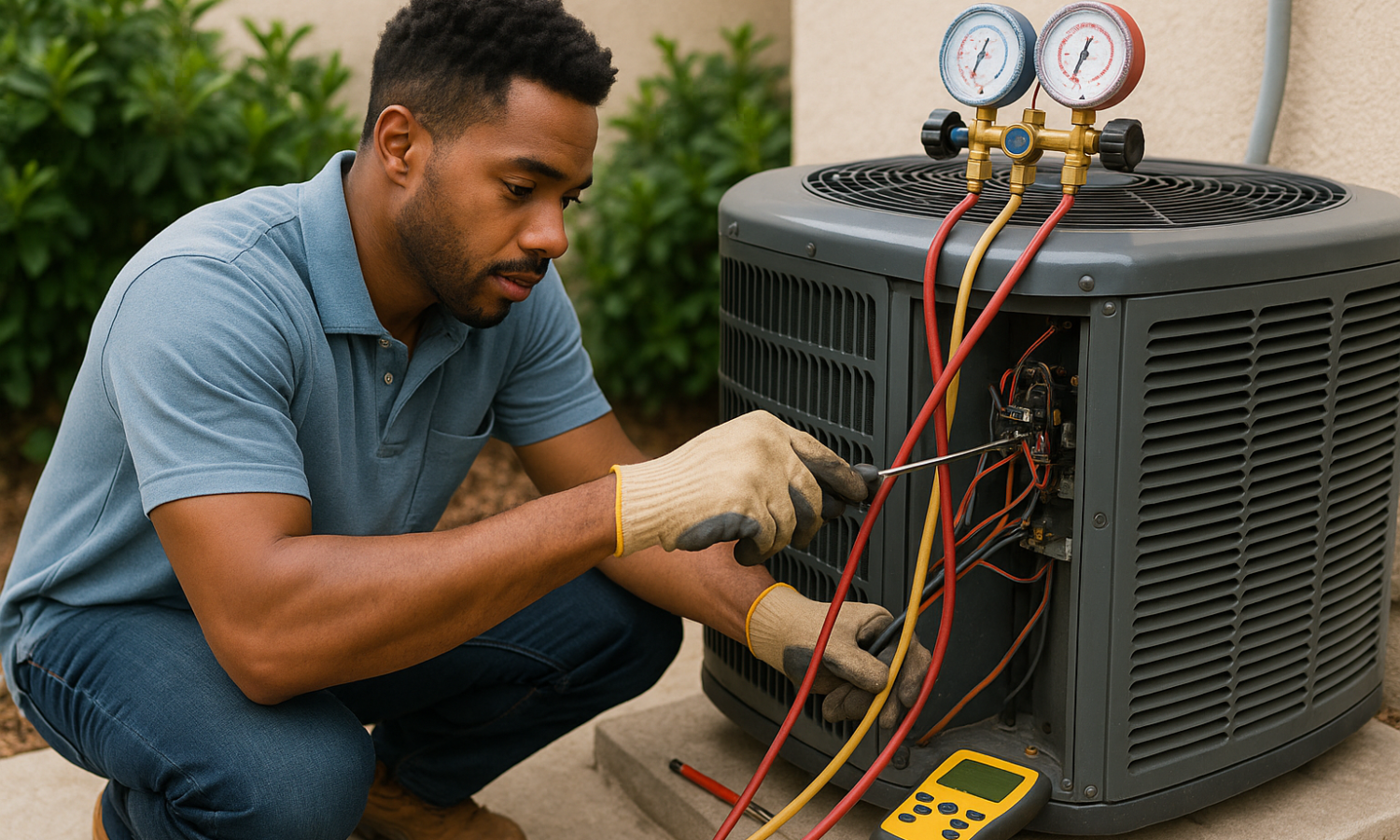
- “Technician cleaning split AC filter during routine HVAC maintenance”
- “Dust buildup on outdoor AC condenser unit before cleaning”
- “Homeowner checking AC drain pipe for blockage under indoor unit”