
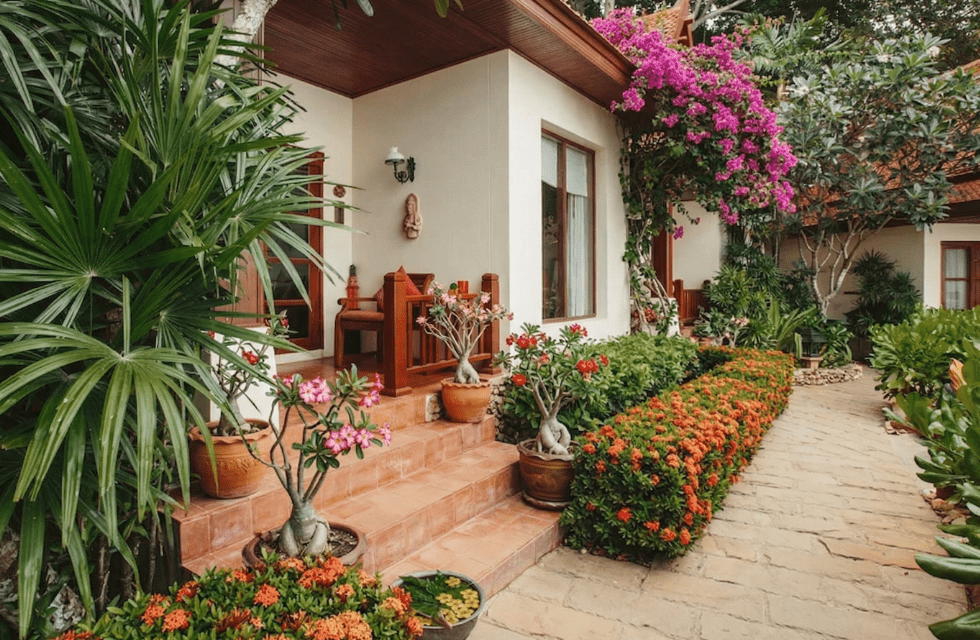
Ever walked past a garden in April, thought it looked stunning, and then driven past the same spot in September wondering what happened? That’s the problem with most home gardens. Everyone plants for one season and forgets the other three.
If you actually want year round garden plants — the kind that keep your yard looking alive no matter what month it is — you need a mix. Not one hero plant. A rotation. Some things flower in spring, some hold color through brutal summer heat, a few carry you into winter when everything else has given up. I’ve been gardening on and off for about twelve years now, mostly in pots and small courtyard beds, and the biggest lesson I learned the hard way is this: color isn’t just about flowers. Leaves, bark, even seed pods count.
Let’s get into what actually works.
Why Most Gardens Lose Color Halfway Through the Year
Year round garden plants fail to make it into most gardens because people buy whatever’s blooming at the nursery that weekend. That’s the honest truth. Nurseries stock seasonal stars, you buy them impulsively, they bloom for six weeks, then sit there green and boring — or worse, they die back and leave a gap.
The fix isn’t complicated, but it does take planning. You need three layers working at once: a structural layer (shrubs, small trees) that holds shape year-round, a seasonal flowering layer that rotates, and a foliage layer that provides color even with zero blooms. Most home gardeners only think about layer two.
I’ve noticed something else too — people massively underrate foliage color. A croton or a coleus will out-color half the flowering annuals out there, and it does it for twelve months, not six weeks. Has anyone ever told you to just plant more leaves instead of more flowers? Sounds odd, but it works.
Another mistake: ignoring your specific climate zone. What holds color in Bengaluru’s mild weather will fry in Jaipur’s summer without shade. Match plant choice to your actual local conditions, not to a generic gardening blog written for a completely different climate (this one included — always double-check against your zone).
Best Flowering Shrubs That Bloom Almost Continuously
Direct answer: For near-continuous flowering in Indian gardens, hibiscus, bougainvillea, and lantana are the most reliable year round garden plants — all three bloom in flushes almost every month with minimal care once established.
Shrubs are your backbone. Get these right and half the work is done.
- Hibiscus — flowers pretty much all year in warm climates, comes in dozens of colors, and honestly forgives a lot of neglect. Water deeply twice a week, that’s it.
- Bougainvillea — thrives on being ignored. Overwater it and you get leaves instead of flowers. I learned this one the hard way after killing my first plant with kindness.
- Lantana — technically considered invasive in some regions, so check local guidelines, but as a color performer it’s hard to beat. Butterflies love it too.
- Ixora — smaller, denser, great for borders. Clusters of tiny flowers in red, orange, or yellow, blooming most of the year in tropical and subtropical zones.
A small nursery owner I spoke to in Jaipur told me hibiscus and bougainvillea alone account for a huge chunk of his repeat sales — people come back because these two just don’t quit. That’s not scientific data, but it lines up with what I’ve seen in my own garden too.
Prune lightly after each flush to encourage the next round. Don’t hack these back hard unless it’s the dormant season.
Foliage Plants That Deliver Color Without a Single Flower
Flowers get all the attention, but foliage plants are the unsung workhorses of any garden that wants year round garden plants with zero flowering gaps.
Croton is probably the best example. The leaves come in red, orange, yellow, green, sometimes all on the same plant, and they hold that color every single day of the year, rain or shine. Coleus is the shade-loving cousin — put it somewhere with dappled light and the leaf patterns alone will do more visual work than a bed of marigolds.
Other strong performers:
- Purple heart (Tradescantia pallida) — deep purple foliage, spreads fast, practically maintenance-free
- Variegated money plant — trailing, works in pots or ground cover, tolerant of low light
- Rex begonia — for shadier corners, leaves look almost painted on
- Cordyline — tall, spiky, great structural color for the back of a bed
I’ll admit I used to dismiss foliage plants as “filler.” That was a mistake. In my own balcony garden, the croton pot has outlasted three separate rounds of seasonal flowers and still looks better than most of them did at their peak.
Perennials That Come Back Every Single Year
Direct answer: True perennials like marigold (in warm zones), periwinkle, and portulaca reseed or regrow on their own, giving you year round garden plants without replanting every season — a genuine time and cost saver.
Perennials save you money and effort. Annuals need replanting, perennials don’t, and over a couple of years the cost difference adds up — easily ₹2,000-3,000 saved annually if you’re gardening even a modest plot.
Periwinkle (vinca) is close to indestructible in Indian climates. It self-seeds, tolerates poor soil, and flowers almost continuously with barely any water once established. Portulaca (moss rose) is another one — low growing, thrives in full sun, and comes back reliably from seed year after year.
Don’t overlook marigold either. In genuinely warm zones it behaves almost like a perennial, blooming on and off through most months rather than dying out after one season like it does in colder regions.
[link to related guide about drought-tolerant perennials here]
Winter-Blooming Options Most People Forget About
This is where most gardens go completely flat. October rolls around, the monsoon flowers fade, and suddenly there’s nothing.
Winter doesn’t have to mean bare beds, though. Petunias, pansies, and dianthus all do brilliantly in the cooler months — exactly when everything else has gone quiet. Chrysanthemums are the real showstopper here; a well-tended mum bed in December can look better than anything you grew all summer.
A few reliable winter picks:
- Petunia — huge color range, blooms through the cooler months, needs full sun
- Pansy — smaller, delicate looking, but surprisingly cold-hardy
- Chrysanthemum — the classic winter star, available in almost every color imaginable
- Calendula — bright orange and yellow, self-seeds readily, low maintenance
Plant these in October or early November for most of North India, a bit later in the south depending on when temperatures actually drop. Timing matters more than people think — plant too early and the heat kills the seedlings before they establish.
Structural Plants for Color That Isn’t Even About Flowers
Bark, stems, and overall shape count as color too, even though nobody talks about it that way. This is the layer people forget entirely.
Bamboo varieties with golden or striped canes add color even in the dead of winter when nothing’s blooming. Certain palms have reddish or blue-toned fronds. Even a well-placed red-stemmed dogwood-type shrub (where climate allows) gives you visual interest through completely leafless months.
This layer matters more than it gets credit for, honestly. Picture a garden where every flowering plant has gone dormant for a stretch — if all you’ve got is bare soil and green hedges, the whole space reads as dead. Add one or two structural pieces with off-green color, and suddenly there’s something to look at even in the worst month.
How to Actually Plan a Garden for Continuous Color
Random planting doesn’t work. You need at least a rough calendar.
Here’s a simple approach that’s worked for me:
- Map out your beds or pots and note which get full sun, partial shade, full shade
- Pick one shrub anchor per zone (hibiscus, ixora, whatever suits the light)
- Add a foliage plant nearby for color on the off-months
- Layer in seasonal flowering annuals that rotate — spring set, summer set, winter set
- Leave one perennial or self-seeding plant per bed as a fallback so there’s never a total gap
It sounds like a lot of steps for something as simple as “plant some flowers,” but honestly, this planning phase is maybe 30 minutes of work and it saves you months of staring at a dull garden later.
Common Mistakes That Kill Year-Round Color
A few things I see repeated constantly, including mistakes I’ve made myself:
- Overwatering flowering shrubs, which pushes leaf growth over blooms
- Planting everything at once instead of staggering by season
- Ignoring soil quality — even the best year round garden plants struggle in compacted or poor soil
- Skipping deadheading, which slows down repeat flowering significantly
- Choosing plants based on nursery photos instead of your actual climate zone
Soil is honestly the one people skip most. A ₹200 bag of compost mixed in twice a year does more for continuous flowering than almost any fertilizer product on the market.
FAQ: Year Round Garden Plants
What are the easiest year round garden plants for beginners? Hibiscus, bougainvillea, and croton are about as forgiving as it gets. They tolerate inconsistent watering, don’t need fancy soil, and still look good most of the year. Start with these before moving to anything fussier.
Do I need different plants for every season, or can some plants really bloom all year? Both, honestly. Hibiscus and bougainvillea genuinely flower almost continuously in warm climates. But even they benefit from a supporting cast of seasonal plants to fill in gaps during their slower flushes.
How much sunlight do most year round garden plants need? Most flowering shrubs on this list want at least 5-6 hours of direct sun. Foliage plants like coleus and rex begonia are the exception — they actually prefer partial or dappled shade.
Can I grow these in pots instead of a garden bed? Yes, most of them adapt fine to containers. Hibiscus, croton, and coleus all do well in pots as long as you size the container up as the plant grows and don’t let the roots get cramped.
How often should I fertilize for continuous flowering? Roughly every 4-6 weeks during active growth with a balanced fertilizer works for most flowering shrubs. Cut back to once every couple of months during winter dormancy.
Why does my garden look great for a month and then go bare? Usually because you’ve only planted one seasonal layer. Add foliage plants and at least one true perennial per bed, and that bare-patch problem mostly disappears.
Final Thoughts
Getting a garden that actually holds color all year isn’t about finding one miracle plant — it’s about layering. Structural shrubs for the backbone, foliage plants for the in-between months, seasonal flowers rotated by climate, and at least one hardy perennial as backup. Get that mix right and you stop dreading the “off months.”
[link to related guide about seasonal planting calendars for Indian climates here] [link to related guide about pot gardening basics here]
Start small if this feels overwhelming — pick one bed, apply the layering approach, and expand once you see it working. Your garden doesn’t need to be perfect in 2026. It just needs to stop going blank for half the year.
Suggested image alt text:
- “Blooming red hibiscus flower in a home garden, example of year round garden plants”
- “Colorful croton foliage plant showing non-flowering garden color”
- “Winter chrysanthemum bed in full bloom, cool-season garden color option”
