So you’ve decided to redo your floors. Maybe the old tiles are cracked, maybe you’re moving into a new flat and the builder-grade flooring just isn’t cutting it. Either way, the first question that hits you is always the same: how much is this actually going to cost?
I get asked this a lot, and honestly, there’s no single number that works for everyone. Flooring installation cost depends on the material you pick, the size of the room, the condition of your existing floor, and — this one surprises people — which city you’re in. A 2 BHK flat in Jaipur won’t cost the same to floor as one in Mumbai. In this guide, I’ll walk you through what actually drives the price, room by room, material by material, so you’re not caught off guard when the contractor hands you a quote.
What Determines Flooring Installation Cost?
Flooring installation cost in India typically ranges from ₹40 to ₹350 per square foot, depending on material and labour. Vitrified tiles sit at the budget end; engineered wood and natural stone push the price up considerably. Location and floor prep also swing the final number.
There isn’t one factor that decides the bill — it’s a combination of things stacking on top of each other. Material cost is the obvious one, but labour rates vary wildly between cities and even between contractors in the same city. I’ve seen two quotes for the exact same 800 sq ft flat differ by nearly ₹40,000, just because one contractor factored in floor levelling and the other didn’t.
Then there’s the condition of your subfloor. If it’s uneven, cracked, or has old adhesive residue, that adds prep work before a single tile goes down. Nobody likes hearing this mid-project, but it’s better to know upfront.
A few things that genuinely move the needle:
- Material type — vinyl and laminate are cheap; marble and imported wood are not
- Room size and layout — oddly shaped rooms waste more material during cutting
- Removal of old flooring — demolition and disposal isn’t free, and many quotes conveniently leave it out
- City and contractor experience — skilled labour in Tier-1 cities charges more, but often finishes faster and with fewer callbacks
- Design complexity — herringbone patterns or borders take longer to lay than plain grid tiling
Cost by Flooring Material
This is probably the section you scrolled down for, so let’s get into actual numbers. Prices below are per square foot, installation included, based on mid-range quality — not the cheapest option on the market, not the premium imported stuff either.
Vitrified tiles run somewhere between ₹45 and ₹120 per sq ft installed. They’re the default choice for most Indian homes now, and for good reason — durable, low maintenance, and available in finishes that mimic marble without the marble price tag.
Ceramic tiles are cheaper, usually ₹35 to ₹90 per sq ft, but they chip more easily and aren’t great for high-traffic areas like living rooms.
Marble is where things get expensive — anywhere from ₹150 to ₹400 per sq ft depending on whether it’s Indian marble (Makrana, Kishangarh) or imported Italian stone. Kishangarh marble, being local to Rajasthan, actually works out cheaper here than in, say, Delhi or Bangalore, simply because transport costs are lower.
Granite falls in a similar range to marble, roughly ₹120 to ₹300 per sq ft, and holds up better against scratches.
Laminate flooring costs ₹60 to ₹150 per sq ft and is a decent middle ground if you want a wood-like look without solid wood pricing.
Engineered wood sits at ₹180 to ₹450 per sq ft — beautiful, warm underfoot, but honestly not the best fit for Rajasthan’s dry heat unless you’re diligent about humidity control.
Vinyl flooring is the budget champion at ₹30 to ₹90 per sq ft, and modern vinyl planks look far better than the vinyl your parents might remember from the ’90s.
Labour Charges: The Part Everyone Underestimates
Labour is where quotes go sideways most often. A lot of homeowners fixate on material price and forget that skilled installation is its own line item — and a significant one.
For tile flooring, expect labour charges of ₹15 to ₹35 per sq ft, depending on tile size and pattern complexity. Larger tiles (like 800x800mm) actually cost less per square foot to lay than smaller ones, since there’s less cutting and fewer joints — a detail most people don’t know until a contractor points it out.
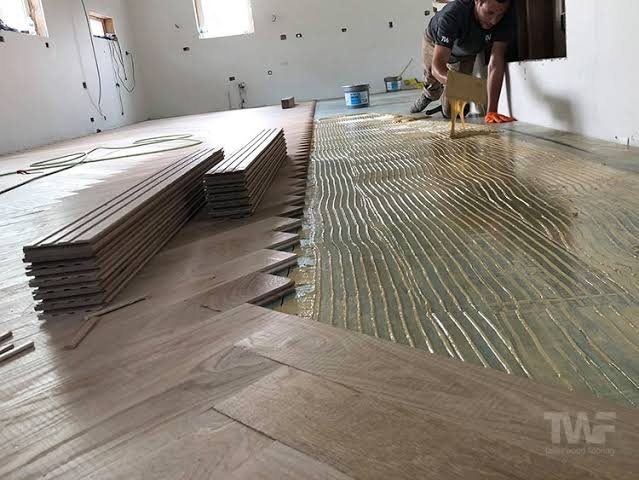
Wood flooring labour tends to run higher, around ₹25 to ₹50 per sq ft, because it needs more precision — subfloor prep, moisture barriers, expansion gaps along the walls. Skip these steps and you’ll see gaps or warping within a year or two. I’ve seen it happen in at least two homes I’ve visited, both times because the installer rushed the moisture barrier step to save time.
Marble and granite installation often needs specialised labour for polishing and edge-finishing after laying, which adds another ₹10 to ₹20 per sq ft on top of the base rate.
A few labour-cost realities worth knowing:
- Weekend or urgent installations often carry a 10-15% premium
- Multi-storey buildings without a lift add a “carrying charge” for material transport
- Removing old flooring before laying new material typically costs ₹8 to ₹15 per sq ft extra
- Contractors in smaller cities generally charge 20-30% less than in metros, though quality can vary more
Room-by-Room Cost Breakdown
Let’s make this concrete. Picture a small business owner in Jaipur renovating a 2 BHK flat — roughly 900 sq ft of carpet area — before putting it up for rent.
For a living room of around 200 sq ft with mid-range vitrified tiles, you’re looking at roughly ₹18,000 to ₹28,000 including labour. Bedrooms, usually smaller at 120-150 sq ft, come to about ₹12,000 to ₹20,000 each.
Kitchens are trickier because of cutouts for cabinets and appliances — expect ₹8,000 to ₹15,000 for a standard 80 sq ft kitchen, with slightly higher labour due to precision cutting around fixtures.
Bathrooms need waterproof, anti-skid tiles, which cost a bit more per sq ft but the area is small enough that total cost stays low — usually ₹6,000 to ₹12,000 per bathroom.
Add it all up for that 900 sq ft flat and you’re realistically somewhere between ₹75,000 and ₹1,40,000 for the whole flooring job, assuming vitrified tiles throughout and no major subfloor issues. Go with marble in the living room and that number climbs fast.
Hidden Costs Nobody Tells You About
This is the section I actually feel strongly about, because I think a lot of quotes are deliberately vague here — not always out of dishonesty, sometimes just because contractors assume you already know.
Old flooring removal and disposal rarely shows up in the initial quote. If you’re replacing existing tiles, someone has to break them out and haul away the debris. That’s ₹8-15 per sq ft you might not have budgeted for.
Floor levelling is another one. If your subfloor has dips or slopes (common in older buildings), self-levelling compound needs to go down first, adding ₹15-30 per sq ft in some cases.
Skirting and beading — the trim along the base of walls — is often quoted separately, at ₹25-50 per running foot, and people forget to account for the total perimeter of their rooms.
Furniture shifting sounds trivial until you realise moving a heavy wardrobe or a dining table isn’t included in most contractor quotes.
Here’s the honest truth: I’ve noticed that the lowest quote is almost never the cheapest option by the time the project wraps up. It’s usually the one with the fewest inclusions, and the “extras” pile up until you’re paying close to what the higher quote would’ve cost anyway. Ask for a fully itemised quote before you sign anything.
DIY vs Professional Installation
Can you save money doing it yourself? For some materials, sort of. Click-lock laminate and certain vinyl plank systems are genuinely DIY-friendly, and you could save the entire labour cost — ₹25-50 per sq ft depending on material.
But tiles, marble, and granite are a different story. These need proper mixing of adhesive, correct spacing, and a level hand that takes years to develop. I wouldn’t recommend DIY tiling for anything beyond a small utility area. A poorly laid tile floor is expensive to rip out and redo — you’d end up paying twice.
[link to related guide on choosing the right flooring material here]
Regional Price Differences Across India
Flooring costs aren’t uniform across the country, and this catches people off guard when they compare notes with friends in other cities.
- Metro cities like Mumbai, Delhi, and Bangalore tend to run 20-30% higher on labour than Tier-2 cities
- Rajasthan, being a marble and stone-producing state, often has cheaper natural stone options than coastal cities
- Southern states generally have strong tiling labour markets with competitive rates
- Transport costs for imported materials add more in landlocked cities than port cities
If you’re getting quotes from multiple contractors, it’s worth asking one or two from a neighbouring city just to sanity-check the numbers, especially for material costs.
[link to related guide on best flooring materials for Indian homes here]
How to Get an Accurate Quote
Don’t just ask “what’s your rate per square foot” — that question alone leaves too much room for surprises later. Ask specifically what’s included: material, labour, old flooring removal, levelling, skirting, and cleanup.
A good practice is getting at least three quotes and laying them side by side on the same spreadsheet, matching line items. It’s tedious, I know, but it’s the only way to actually compare apples to apples instead of getting swayed by whichever number looks smallest on paper.
[link to related guide on hiring a reliable flooring contractor here]
Frequently Asked Questions
How much does flooring installation cost per square foot in India in 2026? It really depends on material — vitrified tiles average ₹45-120 per sq ft installed, while marble can go up to ₹400 per sq ft. Labour alone typically adds ₹15-50 per sq ft on top of material cost.
Is vitrified tile cheaper than marble? Yes, significantly. Vitrified tiles cost a fraction of marble and now come in finishes that look convincingly like natural stone, which is why most middle-class homes have shifted to them over the last decade.
Does flooring cost include labour charges? Not always — and this trips a lot of people up. Some contractors quote material-only prices and add labour separately, so always confirm whether the number you’re seeing is inclusive or not.
How long does flooring installation usually take? For an average 2 BHK, tile flooring typically takes 5-8 days depending on room count and drying time between stages. Wood flooring can take slightly longer due to acclimatisation requirements.
Can I install flooring over existing tiles? Sometimes, yes — if the old tiles are flat and firmly bonded. It saves on removal costs, but it also raises your floor level slightly, which can be an issue with doors and thresholds. A contractor should check this before you decide.
What’s the cheapest flooring option that still looks good? Vinyl plank flooring is probably your best bet if budget is tight. At ₹30-90 per sq ft, it’s affordable, easy to maintain, and modern designs genuinely don’t look “cheap” the way older vinyl did.
Conclusion
At the end of the day, flooring installation cost comes down to a mix of material choice, labour rates in your city, and how much prep your existing floor needs. The mistake most people make isn’t picking the wrong material — it’s not asking enough questions before signing off on a quote. Get itemised estimates, factor in the hidden costs like old flooring removal and levelling, and don’t assume the lowest number is the best deal.
If you’re planning a renovation soon, start by measuring your rooms and getting at least two or three contractor visits before committing — a five-minute site visit often reveals cost factors that no phone quote ever will.