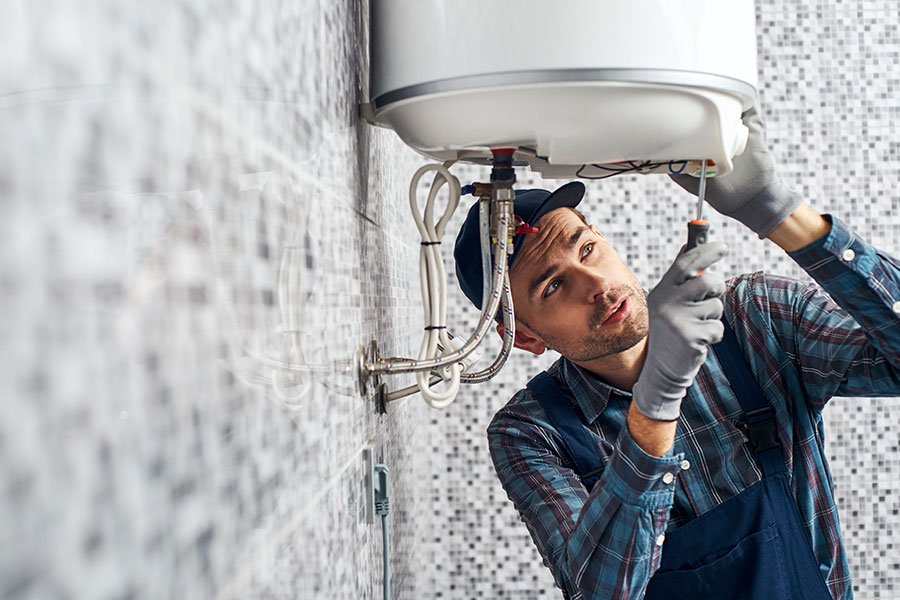
Cold shower on a January morning in Delhi is not something anyone wants to deal with. If your geyser has suddenly stopped working, or the water’s lukewarm at best, you’re probably searching for water heater troubleshooting tips before calling a technician and paying ₹300-500 just for someone to show up.
Good news — a lot of water heater problems have simple causes. Not all of them, but more than you’d think. This guide covers the issues people run into most, what’s usually behind them, and what you can actually try yourself before picking up the phone.
No Hot Water At All: Where to Start
If your geyser is completely cold, the first place to check isn’t the tank — it’s the power.
Electric water heaters trip breakers more often than people realize. Go check your electrical panel. A tripped breaker looks slightly off-position, not fully flipped. Reset it and see if the unit powers back on.
If the breaker’s fine, the thermostat might have reset itself or gotten knocked to a low setting somehow — kids fiddling with switches, that sort of thing happens more than you’d expect. Check the dial is actually set to a usable temperature, usually 50-60°C for most Indian household units.
Gas geysers are a different story. No hot water there usually points to a pilot light that’s gone out, or a gas supply issue. Check whether the pilot light is lit — you’ll see a small blue flame through the viewing window. If it’s out, most models have a simple relight button, but if it won’t stay lit even after relighting, that’s a thermocouple problem and honestly, not a great DIY fix.
I’ve noticed people jump straight to “the heater’s broken, buy a new one” way too fast. Nine times out of ten with electric heaters, it’s the breaker or a faulty heating element — both fixable without replacing the whole unit.
Water Heater Making Strange Noises
Direct answer: Popping, rumbling, or banging sounds from a water heater almost always mean sediment buildup at the bottom of the tank. Hard water areas — common across much of North India — cause this faster, sometimes within 6-8 months of installation.
The noise happens because water gets trapped under a layer of mineral sediment and has to force its way through, creating that popping or rumbling sound. It’s annoying, but not usually dangerous in the short term. Left alone too long, though, it does reduce efficiency and can shorten the tank’s life.
The fix: drain and flush the tank. Turn off power and the water supply, connect a hose to the drain valve, and let the tank empty completely. For a heavily sedimented tank, you might need to do this two or three times before the water runs clear.
- Flush every 6 months if you’re in a hard water zone
- Flush annually if your water’s relatively soft
- Skip it entirely and you’re looking at a shorter tank lifespan, maybe by a couple of years
Picture a family in Jaipur running their geyser daily through a Rajasthan summer — hard water is basically guaranteed there. Skipping maintenance for two years straight is a common story I’ve heard, and by then the noise gets loud enough that neighbors ask about it.
Water Heater Leaking: Is It Serious?
A leaking tank sends most people into panic mode, and fair enough — water damage isn’t cheap to fix.
First, figure out where the leak’s actually coming from. Not every leak means the tank itself is failing.
- Pressure relief valve leak: Often just needs replacing, a relatively cheap fix around ₹200-400
- Loose pipe connections: Tighten with a wrench, sometimes that’s genuinely all it takes
- Tank itself is leaking: This is the bad one — corrosion inside the tank, and it usually means replacement, not repair
Here’s my honest take: if the tank body is leaking, don’t waste money trying to patch it. I’ve seen people attempt sealant fixes on a corroded tank and it buys maybe a few weeks before it’s back to leaking, sometimes worse. Once the metal’s compromised, it’s compromised.
Turn off the power and water supply immediately if you spot a tank leak, and place a bucket underneath while you sort out next steps.
Water Not Hot Enough (Lukewarm Problem)
Water heater troubleshooting for lukewarm output usually comes down to one of three things: thermostat setting, sediment buildup, or a partially failed heating element.
Start simple. Check the thermostat dial hasn’t slipped to a lower setting. Sounds obvious, but it’s the most overlooked cause.
If that’s not it, sediment is the next suspect — a layer of buildup at the bottom acts like insulation, keeping the heating element from properly warming the water above it. A flush (covered above) often solves this.
For electric units specifically, a failing heating element delivers partial heat instead of no heat, which is exactly why the water feels warm instead of properly hot rather than stone cold. Testing this needs a multimeter, and honestly, if you’re not comfortable working near electrical components and water together, this is where I’d say call someone.
Water Heater Cycling On and Off Too Often
This one’s less talked about but genuinely annoying — the unit keeps kicking on and off in short bursts instead of running a normal heating cycle.
Usually it’s a faulty thermostat that’s misreading the water temperature, or a loose electrical connection causing intermittent power. Less commonly, it’s a sign the heating element itself is starting to fail and drawing inconsistent current.
Short cycling wastes electricity and puts extra wear on the components. If you notice your electricity bill creeping up without any change in usage, this could be part of the reason.
[link to related guide about reducing home electricity bills here]
Rusty or Discolored Hot Water
Reddish-brown water from your hot tap, but clear from the cold tap, points pretty clearly at the water heater itself — specifically, internal corrosion.
Every tank-style water heater has a sacrificial anode rod inside, designed to corrode instead of the tank walls. Once that rod is fully used up (usually after 3-5 years, faster in hard water areas), the tank itself starts rusting from the inside.
Replacing the anode rod, if it’s caught early enough, can add real years to your tank’s life for a relatively small cost — usually ₹500-800 for the part. Wait too long, though, and the discoloration means the tank’s already corroding, and rod replacement won’t reverse that.
Pressure Relief Valve Issues
The pressure relief valve is a small but genuinely important safety component — it releases pressure if the tank builds up too much, preventing what could otherwise be a dangerous situation.
If it’s dripping constantly, that’s usually excess pressure or a valve that’s simply worn out and needs replacing. If it’s not releasing at all when tested, that’s arguably more concerning — a stuck valve means no safety release if pressure does build up.
Test it every few months: lift the test lever briefly and confirm water flows out, then closes properly again. Takes thirty seconds and it’s one of those small habits that genuinely matters for safety, not just performance.
When to Call a Professional Instead of DIY
Not every problem on this list is meant for DIY fixing, and I want to be straightforward about that rather than pretend every fix is a weekend project.
Gas geyser issues involving the burner assembly, gas leaks, or anything involving the flue — leave these to a licensed technician. Gas plus a DIY mistake is a genuinely bad combination.
Electrical issues beyond resetting a breaker also fall into “call someone” territory, especially anything involving opening up the heating element housing while the unit’s connected to both power and water lines.
- Tank replacement (heavy, awkward, needs proper disposal of the old unit)
- Any gas smell near the unit — this one’s non-negotiable, get it checked immediately
- Persistent electrical trips even after resetting once or twice
A basic technician visit in most Indian cities runs somewhere between ₹300-600 for diagnosis, sometimes waived if you go ahead with the repair. Worth it for peace of mind on anything involving gas or serious electrical work.
Frequently Asked Questions
Why does my water heater trip the breaker every time I turn it on? This usually points to a faulty heating element or a wiring fault drawing too much current. It’s not something to keep resetting repeatedly — that’s a sign to get it checked rather than a quirk to live with.
How often should I flush my water heater to prevent problems? Every 6 months in hard water regions, once a year if your water’s naturally softer. Skipping this is probably the single biggest reason people end up needing early replacements.
Is it normal for a water heater to take a long time to heat water in 2026 models? Newer energy-efficient models sometimes take slightly longer by design, but a sudden change in heating time on a unit that used to be fast usually means sediment buildup or a partially failing element, not just aging technology.
Can I fix a water heater leak myself? Loose connections and a bad pressure relief valve, yes, those are reasonable DIY fixes. A leak from the tank body itself generally means replacement is coming, and trying to patch it rarely holds for long.
How long should a water heater actually last? Most tank-style units last 8-12 years with decent maintenance, sometimes less in hard water areas without regular flushing. Tankless units tend to run longer, often 15-20 years.
Why is only my hot water rusty-colored? That’s almost always the anode rod inside the tank wearing out, letting the tank itself start to corrode. Cold water bypasses the tank entirely on most setups, which is why only the hot side shows discoloration.
Conclusion
Most water heater problems aren’t as dramatic as they feel in the moment — a tripped breaker, some sediment buildup, a worn-out valve. Working through this water heater troubleshooting guide before assuming the worst can save you both a service call and a fair bit of money. That said, gas issues, serious electrical faults, and a genuinely leaking tank are where DIY should stop and a professional should step in.
Next time your geyser acts up, run through the checks here first. Chances are decent it’s something you can sort out yourself before dinner time — and if it’s not, at least you’ll know exactly what to tell the technician when they arrive.
[link to related guide about choosing the right geyser for your home here] | [link to related guide about reducing water heating costs here]
Suggested image alt text:
- “Person checking electrical breaker panel during water heater troubleshooting”
- “Sediment buildup being flushed out of a water heater tank drain valve”
- “Close-up of a pressure relief valve on a residential water heater”